Unraveling Counter-Regulatory Transcriptional Control by the ZBED Family in Beta Cell Stress and Immune Tolerance
Contact PI: Erica Cai, PhD, Indiana University (R03)
Start Date: May 1, 2026
NIH HIRN Gateway Investigator Award Recipient
Abstract
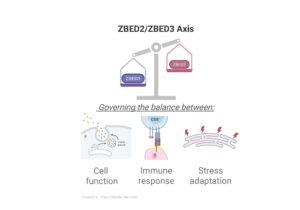
Type 1 diabetes (T1D) is caused by the immune-mediated destruction of pancreatic beta cells, and enhancing beta cell resilience under inflammatory conditions remains a critical challenge for cell replacement approaches. Screening efforts have identified ZBED3, a transcription factor previously linked to type 2 diabetes (T2D), as a novel modulator of beta cell survival under autoimmune attack. Analysis reveals increased ZBED3 expression in beta cell subclusters associated with T1D, contrasting with the related transcription factor ZBED2, which has anti-inflammatory properties and is selectively absent in beta cells. Integration of public and novel datasets has identified shared transcriptional targets of ZBED family members involved in critical inflammatory and metabolic pathways, suggesting that these factors may exert opposing regulatory effects on beta cell fate. This study will test the hypothesis that ZBED2 and ZBED3 govern the balance between beta cell function, immune tolerance, and stress adaptation. Utilizing gene-edited beta cells derived from human induced pluripotent stem cells (iPSCs) and primary islets, the project will pursue goals of defining the role of ZBED3 in regulating beta cell immunogenicity, function, and stress response, while investigating the ability to enhance immune tolerance by inducing ZBED2. Establishing ZBED2 and ZBED3 as central regulators of beta cell fate will address a critical gap in T1D therapy and support the development of transcription-based strategies to improve the durability of cell replacement interventions.
 Follow


