Targeted Nanotheranostics for Beta-Cell Protection in T1D
Contact PI: Ping Wang, PhD, Michigan State University (R03 DK147443)
Start Date: May 1, 2026
NIH HIRN Gateway Investigator Award Recipient
Abstract
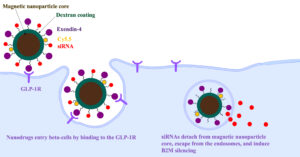
Type 1 diabetes (T1D) results from the selective and progressive destruction of pancreatic beta-cells within the islets of Langerhans. Most current therapies for T1D focus on symptom management; while insulin administration helps control hyperglycemia and delay complications, it does not offer a cure. With the growing recognition of beta-cells as central players in T1D pathogenesis, there is renewed interest in developing therapies that preserve and restore beta-cell function. Therefore, new treatments that address the underlying mechanisms of beta-cell loss, particularly by protecting beta-cells from autoimmune attack, are urgently needed. Iron oxide nanoparticle-based theranostic nanodrugs have shown promise for targeted drug delivery to pancreatic beta-cells. However, systemic administration of these nanoparticles often results in off-target effects and toxicity, limiting their clinical utility. To address this challenge, a beta-cell-targeted nanoparticle platform is proposed to enable both selective delivery and noninvasive in vivo tracking of therapeutic agents that prevent beta-cell damage and promote beta-cell survival. The nanodrugs will be designed with an iron oxide core functionalized with Exendin-4 peptides to target the glucagon-like peptide-1 receptor (GLP-1R), which is highly expressed on pancreatic beta-cells. For the therapeutic component, beta-2 microglobulin (β2M) siRNA will be conjugated to the nanoparticles to reduce CD8+ T cell-mediated beta-cell destruction. In addition to delivering therapeutic siRNAs, the nanodrugs will be administered via the intrapancreatic duct and imaged using dual-modality positron emission tomography (PET) and magnetic resonance imaging (MRI). The Exendin-4 peptide will be radiolabeled with 64Cu for PET imaging, and the iron oxide core will provide MRI contrast. Both targeted and non-targeted control nanodrugs will be synthesized to evaluate and compare specificity, cellular uptake, and functional efficacy in beta-cell lines in vitro. In vivo, evaluation in T1D mouse models will include intrapancreatic ductal administration of nanodrugs, followed by PET/MRI tracking to determine biodistribution, pharmacokinetics, and beta-cell accumulation. Therapeutic outcomes will be assessed by monitoring blood glucose levels, insulin production, and performing correlative histological analyses. This approach aims to deliver a targeted, image-guided nanodrug platform capable of siRNA delivery to islet beta-cells, offering a novel strategy for beta-cell protection and improved treatment of T1D.
 Follow


