Tissue Context Matters: How Exocrine Cells Regulate Islet Function in Human Pancreas
Contact PI: Julia Panzer, PhD, City of Hope (R03 DK147338)
Start Date: May 1, 2026
NIH HIRN Gateway Investigator Award Recipient
Abstract
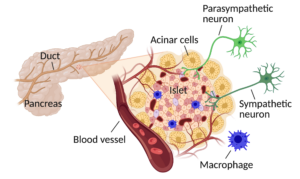
This project investigates how the native pancreatic microenvironment shapes human islet cell function, in health and type 1 diabetes (T1D). While most human islet studies rely on isolated islets, this approach disrupts key tissue interactions, potentially obscuring physiological and disease-relevant responses. We will leverage human pancreatic tissue slices, which preserve native cellular architecture, to directly compare hormone secretion and calcium signaling between slices and isolated islets from the same donors. Our first aim will quantify the impact of removing islets from their microenvironment by comparing responses to endocrine stimuli in paired samples from both T1D and non-diabetic donors. The second aim will evaluate how non-endocrine cells (e.g., acinar, ductal, vascular, neuronal) influence islet cell activity by stimulating these populations in situ and measuring endocrine cell responses. Together, these aims will generate critical insights into the physiological relevance of widely used model systems and identify key paracrine signals that regulate islet function. This study fills a major gap in our understanding of how the human islet environment contributes to hormone regulation and diabetes pathophysiology. It introduces a novel matched-comparison approach that integrates functional and imaging data across models and donor types, offering an innovative platform to advance islet biology. Findings from this work will inform the development of more physiologically relevant human islet models and support the design of targeted therapies for diabetes, directly contributing to public health by enhancing our ability to study and treat this disease.
 Follow


